ENVISIONING WTH MICROSOFT PARTNERS
Connecting patient, clinical, and technology needs to define the future of connected care
Problem: Healthcare organizations were under increasing pressure to improve access, coordinate care, reduce cost, and create more connected experiences for patients and care teams. At the same time, patient information remained fragmented across systems, clinical teams were working through disconnected workflows, and organizations were navigating complex requirements around interoperability, security, compliance, and data. The challenge was not simply adopting new technology. Healthcare organizations needed to determine where cloud, data, and AI could improve care, how those capabilities would fit into existing clinical environments, and which opportunities were worth pursuing.
Role: Senior Creative Strategist at Indigo Slate’s Human Experience Innovation Studio. Partnered with the Microsoft Catalyst team to design and lead healthcare transformation engagements, bringing together patient, clinical, business, and technology perspectives to define connected-care opportunities and strategic roadmaps.
Outcome: Created a repeatable approach that helped healthcare organizations move from broad transformation goals to prioritized opportunities, future-state care experiences, and roadmaps connecting patient and care-team needs with Microsoft Cloud for Healthcare capabilities.
Context
Healthcare was moving toward a more connected model in which patients, care teams, data, and digital services increasingly needed to work together.
For healthcare organizations, that transformation was complex. Patient information often lived across multiple systems. Care teams worked across different workflows and technologies. New digital experiences needed to connect with existing clinical environments while meeting requirements for interoperability, security, privacy, and compliance.
Microsoft Cloud for Healthcare brought together cloud, data, AI, collaboration, and interoperability capabilities that could support this shift. The challenge for individual healthcare organizations was determining where those capabilities could create meaningful value within their specific care models and technology environments.
Working with the Microsoft Catalyst team, I helped healthcare organizations explore the “Art of the Possible” and translate that vision into specific opportunities for connected care.
Impact
As a direct result of these collaborations we are able to provide:
Better Experiences through Personalized Care, Patient Insights, Virtual Health
Better Care through Care Team Collaboration, Care Coordination, Continuous Patient Monitoring
Better Insights through Clinical Analysis, Operational Analytics and Data Interoperability.
Approach
Worked with Microsoft and healthcare leadership teams to understand business priorities, patient needs, clinical workflows, and technology constraints
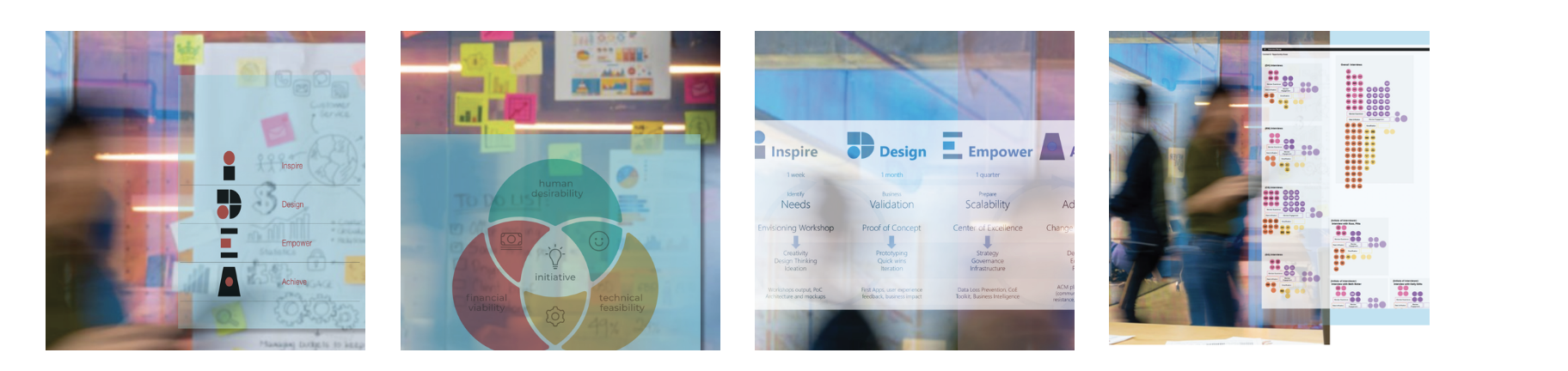
Used “Art of the Possible” envisioning to explore how cloud, data, AI, and connected technologies could improve patient and care-team experiences
Mapped end-to-end patient and clinical journeys to identify breakdowns, dependencies, and opportunities for better connected care
Brought clinical, technology, business, and patient perspectives together to prioritize opportunities based on human value, business value, and feasibility
Connected priority opportunities to relevant Microsoft Cloud for Healthcare capabilities, including AI, data interoperability, virtual health, analytics, security, and collaboration
Translated the work into future-state experiences, prioritized opportunities, and strategic roadmaps for continued development